
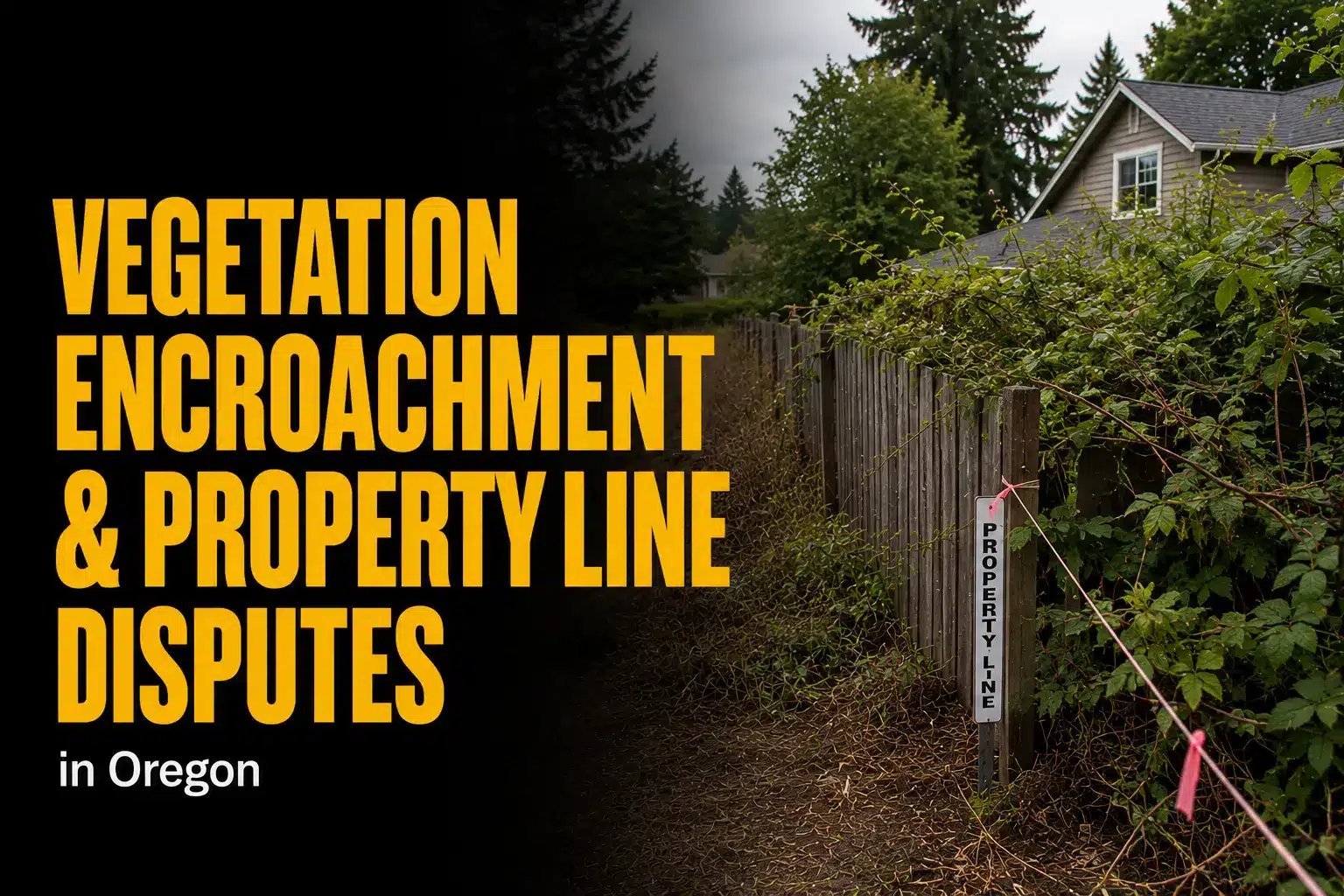
A blackberry patch does not respect a fence line, and neither do tree roots or overhanging branches. When a neighbor’s vegetation crosses onto another property, Oregon law gives the affected owner some real rights, along with some firm limits on how far those rights go. Billy Goat Property Services gets called into these situations regularly, and understanding the actual rules changes how a homeowner should approach the problem before reaching for a pair of shears.
The Self-Help Rule in Oregon
Oregon follows what is generally called the self-help rule for encroaching vegetation. A property owner can cut back branches, roots, or brush that cross onto their land, but only up to the property line, and only working from their own side of it. There is no legal requirement to notify the neighbor before trimming, though Oregon REALTORS guidance on the subject notes that giving notice is the neighborly thing to do even if the law does not require it.
This right comes with a real limit attached. Trimming cannot cross onto the neighbor’s property without permission, and if the trimming damages or kills the plant through careless cutting, the person doing the trimming can end up liable for that damage instead of the neighbor whose vegetation started the problem.
When a Neighbor’s Vegetation Becomes Your Legal Problem
Oregon case law addresses when encroaching roots or branches cross the line from a nuisance to something a property owner can actually recover damages for. In Carvalho v. Wolfe, Oregon’s Court of Appeals held that intruding roots or branches may be treated as a trespass or nuisance, but generally only when the intrusion resulted from intentional, negligent, reckless, or abnormally dangerous activity. Ordinary, natural growth crossing a property line typically falls short of that standard, which is why the self-help right to trim it yourself, rather than a damages claim against the neighbor, is usually the practical path forward.
Where Blackberry Specifically Fits Into This
Blackberry spreading across a property line is one of the most common versions of this problem we see, and it behaves differently than a tree branch. Canes root wherever they touch the ground, so a patch that starts entirely on one property can be sending up new growth on the neighbor’s side within a season or two, without any roots crossing underground the way a tree’s would. The self-help right to cut it back at the property line still applies, but cutting canes without removing the root crown on your own side just means the same growth comes back the following year.
A Boundary Dispute Resolved in Tualatin
Two neighbors in Tualatin had gone back and forth for a season over a blackberry patch that had started on one property and pushed several feet across the shared fence line. Rather than escalate it further, one owner called us to clear the growth on their side back to the root crown, working entirely within their own property line. Removing the root crown on that side stopped the yearly regrowth that had been fueling the disagreement, without either neighbor needing to sort out whose responsibility the original patch was.
An Overhanging Branch Situation in West Linn
A homeowner in West Linn had a neighbor’s tree branches extending several feet over their fence, dropping debris across their patio every fall. They were within their rights to trim the branches back to the property line themselves, but preferred to have it done professionally given the size of the limbs involved and the risk of damaging the tree if cut incorrectly. We trimmed back to the line from their side only, and the homeowner sent the neighbor a courtesy notice beforehand even though it was not legally required.
When to Call a Professional
A small amount of overhang or a single blackberry cane creeping through a fence is a manageable trim for most homeowners. Once larger limbs are involved, once removing growth at the root is necessary to actually stop it from returning, or once a situation has enough tension attached that documentation matters, that is the point where having a professional crew do the work, working strictly within the property line, is worth more than doing it yourself.
Sending a courtesy notice before the work, even when not legally required, is generally the better path for keeping a minor vegetation issue from becoming something bigger between neighbors.
Common Questions About Vegetation Encroachment in Oregon
Can I cut branches or roots that cross onto my property without asking permission?
Yes. Oregon’s self-help rule allows you to trim encroaching branches, roots, or brush back to the property line without the neighbor’s permission, as long as you work only from your own side of the line.
Do I have to notify my neighbor before trimming their tree’s branches?
No, notice is not legally required. It is considered the courteous approach, and it can help avoid a dispute over what was trimmed and why.
What happens if I damage the tree while trimming it?
You can be held liable for damage if trimming is done carelessly and it injures or kills the tree, even though you had the right to trim the overhanging portion in the first place.
Is my neighbor responsible for blackberry that spread from their yard into mine?
Generally not, unless the spread resulted from something beyond ordinary growth, like intentional or reckless conduct. In most cases, the practical solution is exercising your own right to clear the growth on your side rather than pursuing a claim against the neighbor.
Can a professional crew clear encroaching vegetation without crossing the property line?
Yes. We work strictly within the property boundary being cleared and can coordinate documentation or photos if the situation involves an ongoing dispute with a neighbor.
If encroaching blackberry, brush, or branches are creating a problem along your property line, contact us for a free estimate. We clear growth cleanly and strictly within your property boundary, whether or not a neighbor dispute is involved.