
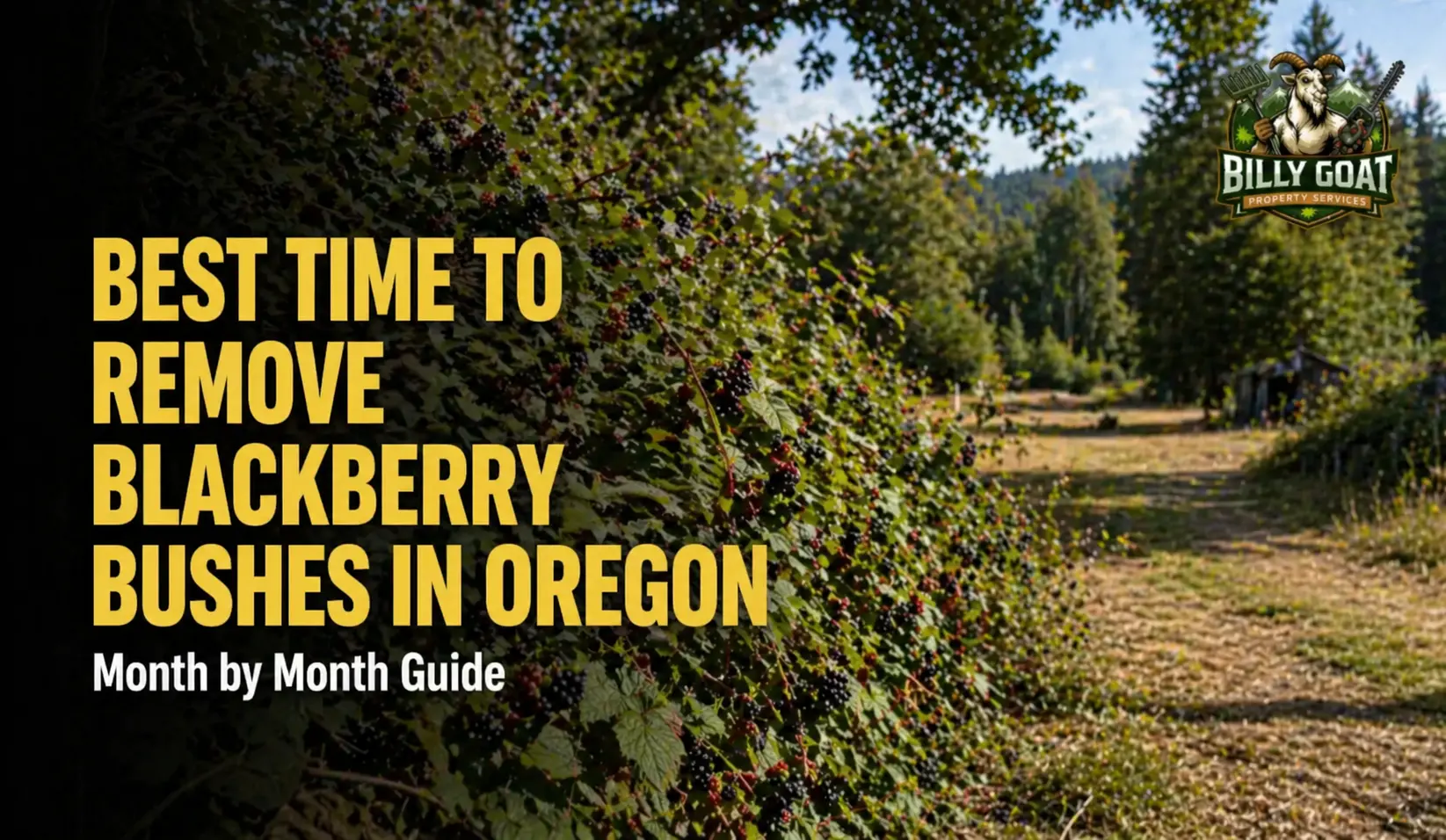
A homeowner in Lake Oswego called us last September. She’d been cutting the same blackberry patch every summer for three years – same corner of the yard, same weekend in June, same results. By August it was back. What she didn’t know was that by cutting in the heat of summer, she was doing exactly what the plant wanted: removing the leaves before the roots had a chance to starve. She was working hard and getting nowhere.
Timing blackberry removal correctly isn’t complicated, but it matters more than most people realise. Physical digging, mechanical cutting, and herbicide treatment each have a different sweet spot in the Oregon calendar – and the wrong method at the wrong time means the patch comes back stronger. This guide breaks down exactly when to do what, so you stop spending weekends on a job that doesn’t stick.
Why Timing Matters for Blackberry Removal
Himalayan blackberry – the aggressive invasive species blanketing most of the Portland metro area – behaves differently in each season. The plant stores energy in its root crown. The canes you see above ground are only half the problem. Whether you cut or treat with herbicide depends on whether you’re targeting that underground root system or just knocking back surface growth.
Cut at the wrong time and you’re feeding the roots instead of killing them. Apply herbicide in summer and most of it won’t reach the crown. Dig in dry August soil and you’ll snap roots instead of pulling them clean, leaving live fragments that resprout within weeks. Oregon State University Extension confirms that persistence and timing are what separate successful removal from repeated frustration.
Fall: The Best Overall Window for Most Portland Properties
September through November is the single best season for blackberry removal in Oregon, especially for properties where herbicide treatment is part of the plan.
Here’s biology. As temperatures drop, Himalayan blackberry starts moving energy from its canes down into the root system for winter storage. Any systemic herbicide applied to the leaves in fall gets actively transported to the roots – which is exactly where you need it to go.
The Clackamas Soil and Water Conservation District specifically recommends fall as the ideal window for chemical control, noting that plants are pulling resources down into their roots during this period. This makes fall applications significantly more effective than the same treatment in spring or summer.
Fall also has practical advantages for physical removal. Temperatures between 45 and 65 degrees – typical for Portland from October through November – make heavy outdoor labor manageable in a way July heat simply isn’t. The canes are still visible and haven’t died back, so you can see the full extent of the patch. Bird nesting season has ended. And soil that was brick-hard in August softens after the first fall rains, making root work genuinely possible.
For most Portland homeowners, calling before October is the smart move. We book out quickly once the season turns.
Spring: Best for Digging Out Root Crowns
March through May is the best season specifically for physical digging. Portland soil in spring is moist from winter rain but not yet waterlogged, and root crowns pull free far more cleanly when the ground has given. OSU’s Solve Pest Problems program notes that moist spring soil is the optimal condition for pulling canes and digging out root systems.
Spring removal also gives you a head start before the season’s aggressive push. Himalayan blackberry starts sending up new primocanes once temperatures climb above 50 degrees. Getting ahead of that growth in March or April – before canes reach two to three feet – makes the cutting and hauling stage significantly faster.
One important caveat: large-scale clearing in spring means checking for active bird nests before you start. This isn’t just ecological courtesy – it’s a federal legal requirement covered in the section below. Spring is also a strong window for follow-up visits after fall herbicide treatment. By April, you’ll see clearly which root zones are still sending up new shoots and can target them precisely.
Summer: Manage Growth, Don’t Expect Full Control
June through August is not ideal for permanent blackberry removal – but it’s not wasted time either.
Summer in Portland is when Himalayan blackberry is at its most aggressive. Canes can grow twenty feet or more in a single season. Left unchecked from June through August, a patch that looked manageable in May can become a full wall of growth by Labor Day. Mechanical cutting – mowing or brush-cutting the canes down – is worth doing to prevent the patch from spreading and to deplete the plant’s energy reserves over time. But cutting alone, without follow-up root work or fall herbicide treatment, rarely ends the problem. You’re managing, not eliminating.
The bigger summer challenge is physical conditions. Working through thorny blackberry in 85 degree Portland heat is miserable, and dry soil makes root digging frustrating and incomplete. Most professional crews handle summer jobs with mechanical brush cutters to knock the growth back, then return in fall for herbicide treatment or a follow-up dig when conditions improve. That’s the two-visit approach that actually works.
Winter: Use It for Planning, Not Removal
December through February is the least effective time for blackberry removal. The plant is dormant. Herbicides have little effect because the plant isn’t translocating nutrients. Saturated or frozen soil in Portland’s higher-elevation suburbs makes root digging harder to do cleanly. And wet winter conditions slow debris hauling and site cleanup considerably.
That said, winter isn’t wasted. If you have a problem property, winter is exactly when you should be getting estimates, walking the site, and locking in a spring or fall schedule before crews book up. We regularly have homeowners call in January who get their preferred timing; the people who call in April often end up on a waiting list. Use the off-season to plan so you’re not scrambling when the window opens.
The Bird Nesting Problem Most Homeowners Miss
This is the part of blackberry removal timing that almost nobody talks about, and it matters more than most people expect.
Himalayan blackberry thickets are active nesting habitat for dozens of bird species. Many of these – song sparrows, towhees, red-tailed hawks, and others – are protected under the federal Migratory Bird Treaty Act. That law makes it illegal to destroy an active nest, even if it’s on your own property inside a blackberry patch you own outright.
The practical risk window is March 1 through July 31. That’s when most migratory and resident songbirds are actively nesting in western Oregon. The U.S. Fish & Wildlife Service recommends checking vegetation scheduled for removal for active nests before clearing begins during nesting season. Active nests must be left undisturbed until the young have fledged.
For smaller patches, this is manageable – you can look before you cut. For large infestations covering a significant portion of a property, this is one more reason fall removal is the lowest-risk and highest-impact timing window. No nesting conflicts, better herbicide uptake, cooler working conditions. Fall really does check every box.
Month-by-Month Oregon Blackberry Removal Calendar
| Month | Best Method | Notes |
| January | Planning only | Ground saturated; herbicide ineffective |
| February | Planning only | Get estimates, book spring or fall crew |
| March | Physical digging | Moist soil; check for nests before clearing |
| April | Physical digging + follow-up | Peak window for root crown removal |
| May | Mechanical cutting | New cane growth; check nests before large clearing |
| June | Mechanical cutting | Growth aggressive; manage, don’t expect full control |
| July | Mechanical cutting | Hottest/driest; hardest conditions for root work |
| August | Mechanical cutting | Begin monitoring for fall opportunity |
| September | Herbicide + cutting | Best month for chemical treatment |
| October | Herbicide + physical | Peak window: nesting over, soil softening |
| November | Physical + herbicide | Last chance before full dormancy |
| December | Planning only | Plant dormant; treatments largely ineffective |
When to Call a Professional for Blackberry Removal in Portland
If the patch is small – say, a few square yards in a corner of the yard – and you’re willing to come back every two to three weeks through the season, you can manage it yourself. Good gloves, loppers, and consistency will make a dent. But there’s a size and complexity threshold where DIY stops being practical, and most homeowners hit it faster than they expect.
Once a patch covers more than a few hundred square feet, or starts growing through a fence, into a slope, or across a structure, the math changes. The equipment needed to do the job properly – commercial brush cutters, dump trailers, root crown extraction tools – isn’t something most households have lying around. And if you’ve already tried removal once and watched it come back, that’s usually a sign the root crowns weren’t fully addressed the first time.
The homeowner from Lake Oswego we mentioned at the top? She had about 400 square feet of established blackberry with root crowns that had been building for years. We handled the initial cut, extracted the crown systems, hauled everything off the property, and coordinated a licensed herbicide follow-up for October. She’s called back once since then – for a completely different part of the property. That’s what a properly timed removal looks like.
If you have a deadline – a home sale, a rental turnover, a project starting in spring – or if the terrain makes physical access genuinely difficult, that’s also when a professional crew earns its cost. We’ve seen a lot of well-intentioned DIY jobs turn into much bigger and more expensive problems six months later. Getting it done right the first time is almost always cheaper than fixing it the second.
Get Your Free Estimate
Billy Goat Property Services has been clearing blackberry across the Portland tri-county area for 18 years. We handle the cut, root crown removal, full debris haul-away, and coordinate licensed herbicide treatment where appropriate. Call 503-783-4747 or get your free estimate here.
Common Questions About Blackberry Removal Timing
What is the best time of year to remove blackberries in Oregon?
The best overall time is fall – specifically September through November. Plants are moving energy into their root systems, making herbicide far more effective, temperatures are manageable, and bird nesting season has ended. For physical digging specifically, early spring (March-April) is the best window because moist soil allows root crowns to pull free cleanly.
Can you remove blackberries in summer in Portland?
Yes, but summer is most useful for managing spread, not achieving full control. Mechanical cutting in June through August prevents the patch from expanding, but dry soil makes root work difficult and herbicide is less effective when plants are pushing energy into cane growth. For permanent removal, follow summer cutting with fall treatment.
Is it illegal to remove blackberries during nesting season in Oregon?
Removing the blackberry plants themselves isn’t illegal during nesting season, but disturbing or destroying an active bird nest is a federal violation under the Migratory Bird Treaty Act. Himalayan blackberry thickets are common nesting habitats from March through July. Before clearing any large area during this period, check for active nests. This is one of the key reasons fall removal is the preferred window for large-scale clearing on Portland properties.
How many times do you need to remove blackberries before they stop coming back?
Most established infestations require at least two to three removal visits over twelve to eighteen months before root systems are sufficiently depleted. Oregon State University Extension research indicates that control of heavily established patches can take several years, particularly when root crowns are deep and rhizomes have spread. The goal is to exhaust the root system’s stored energy before it can regenerate – each visit is easier than the last.
When should I call a professional blackberry removal company in Portland?
Call a professional when the patch is large, keeps coming back after DIY attempts, is growing through fences or structures, or needs to be cleared by a specific deadline. Billy Goat Property Services offers free estimates across the Portland tri-county area. Call 503-783-4747 or request your free estimate here.
The window you’re in right now won’t last. Fall books fast, spring goes faster. Call 503-783-4747 or get your free estimate from Billy Goat Property Services and let’s figure out the right time for your property.